Getting a Grip
Rather than improving work boots, Sipe saw a bigger opportunity. He turned his idea toward vehicles and, in 1923, was awarded U.S. Patent #1452099 for his design focused on solid rubber tires.
It didn’t make him wealthy, the automotive world soon moved on to air-filled tires, but the science behind his discovery was solid. His workplace-inspired idea is still a key part of tire engineering a century later.
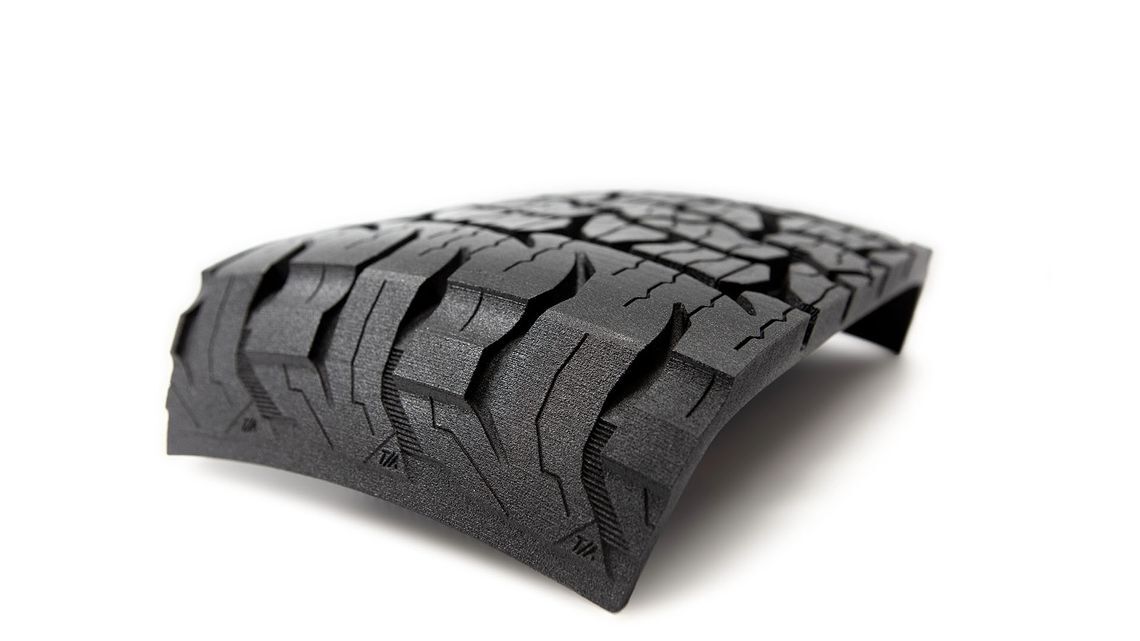
As a tire rolls, sipes open slightly, funnelling away water, slush, or snow from the centre of the tread, the “contact patch” where rubber meets road. The drier that patch stays, the more traction the tire can achieve. And beyond clearing moisture, sipes allow the tread to flex around rough surfaces and small stones, improving control in all kinds of conditions, from rain-soaked highways to snowy rural roads.
Sipes are just one part of a much larger traction story. To understand the full science of grip, we spoke with Brandon Sturgis, Product Design Lead at BFGoodrich Tires.
What is Grip?
Grip isn’t a single force, it’s the sum of many interactions between tire and terrain. It’s what keeps your vehicle stable when you accelerate, corner, or climb. Engineers at BFGoodrich think of grip in three distinct layers:
Molecular Grip
Found in the chemical makeup of the rubber itself. Even on a perfectly smooth surface, vulcanized rubber compounds create adhesion on a molecular level, providing natural “stickiness.”Micro-Mechanical Grip
Occurs where the tire’s microscopic surface texture meets the texture of the road. No surface is perfectly flat, not even paved ones. The small “teeth” of rubber interlock with the equally uneven surface of asphalt or gravel, creating tiny but powerful bonds, like microscopic velcro.Macro-Mechanical Grip
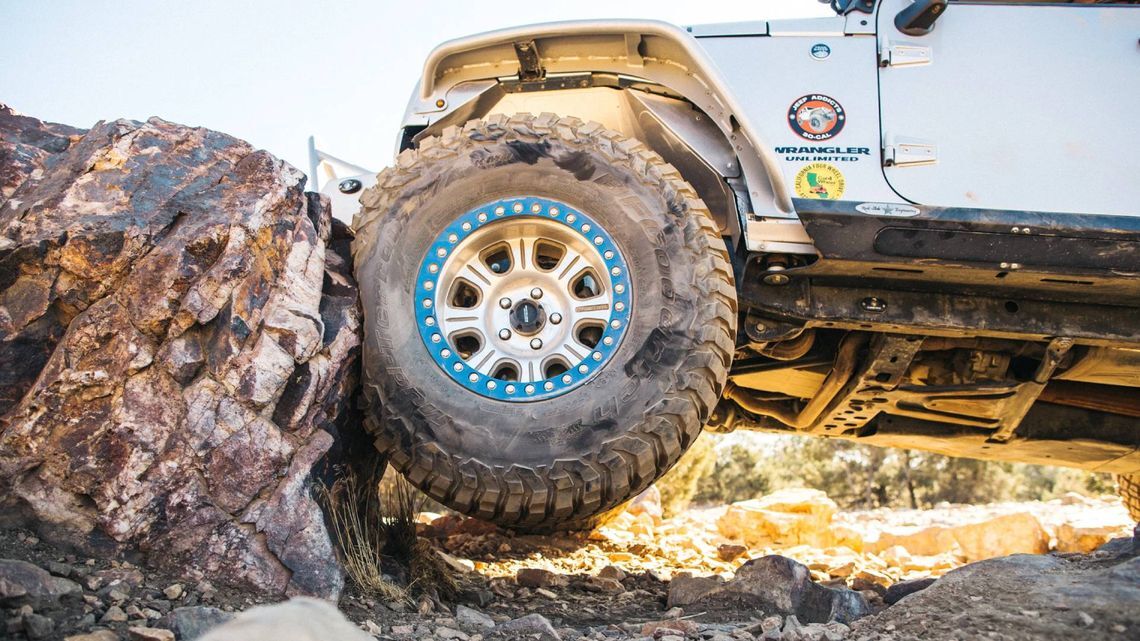
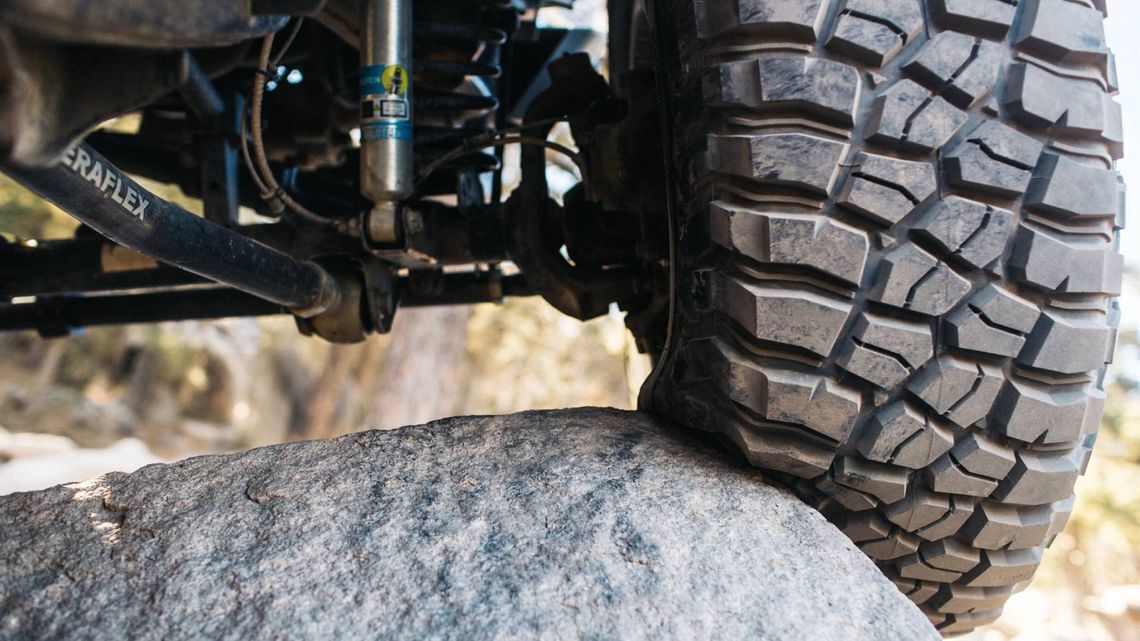
Comes from the larger shape and structure of the tire. When tread blocks flex and adapt around obstacles, or sipes open to clear debris, the tire sustains its grip over changing terrain.
“For a perfect example of macro-mechanical grip, look at the BFGoodrich Mud-Terrain T/A KM3 as it crawls over a rock,” says Sturgis. “We designed that tread pattern to fold and grip when aired down. Like a hand grabbing a ledge, it cups the obstacle, giving the tire incredible hold.”
At BFGoodrich, teams of chemists, materials scientists, and designers each focus on different levels of grip. From formulation to field testing, hundreds of experts contribute before a tire ever hits Canadian roads or trails.
Tools of the Traction Trade
Building grip is one challenge. Keeping it consistent, through thousands of kilometres of rain, gravel, ice, and mud, is another. Every factor on the road, from humidity to surface texture to temperature, plays a role in traction.
“If you look at our tread patterns, they all share a familiar DNA,” says Sturgis. “That’s not just for looks. That interlocking design provides both forward and lateral traction at a range of steering angles and in all sorts of terrain. It’s not easy to achieve that level of versatility, so when something works, we make it our foundation.”
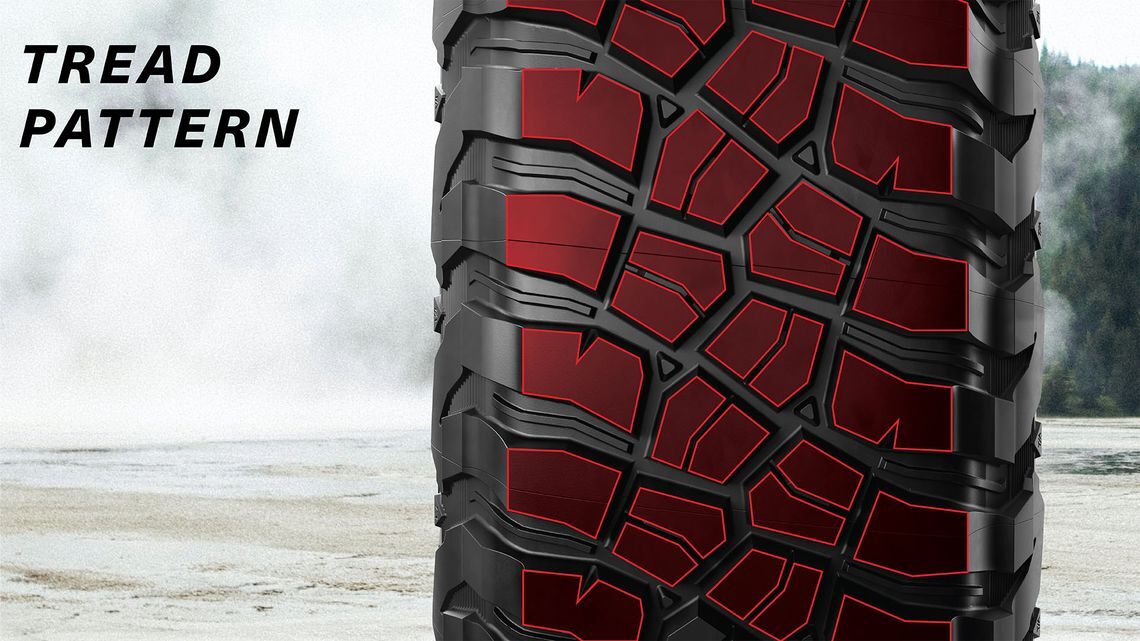
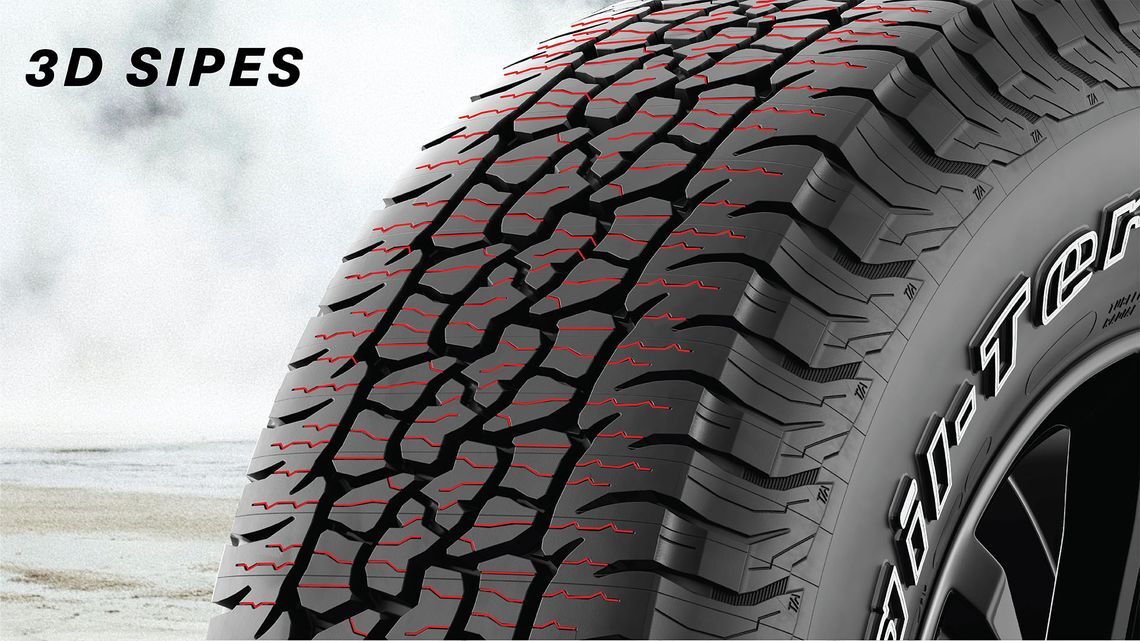
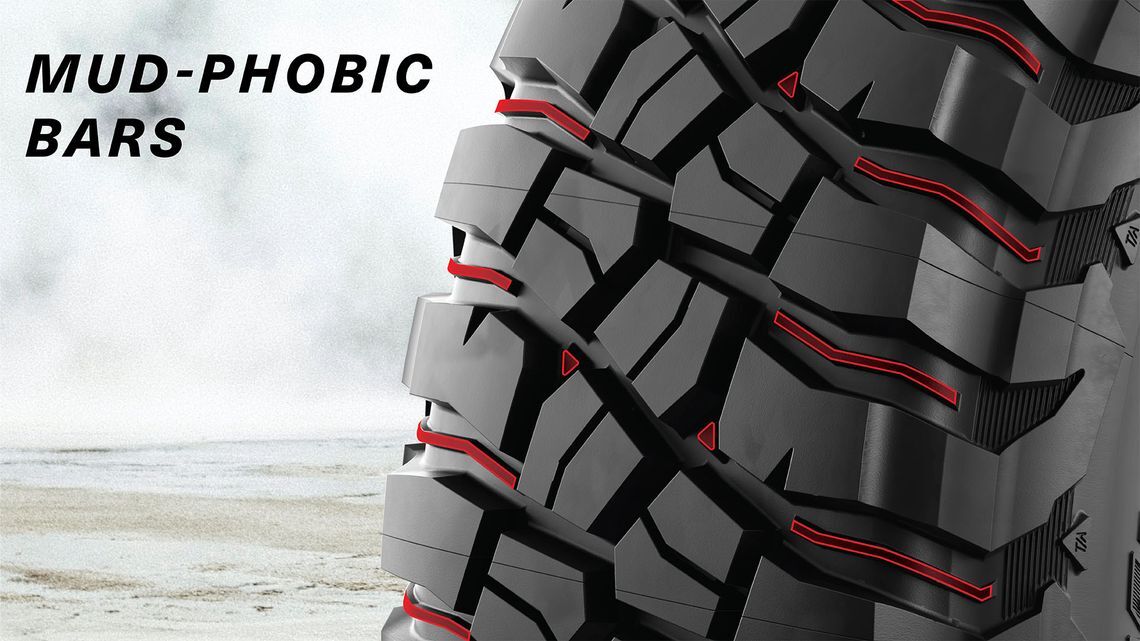
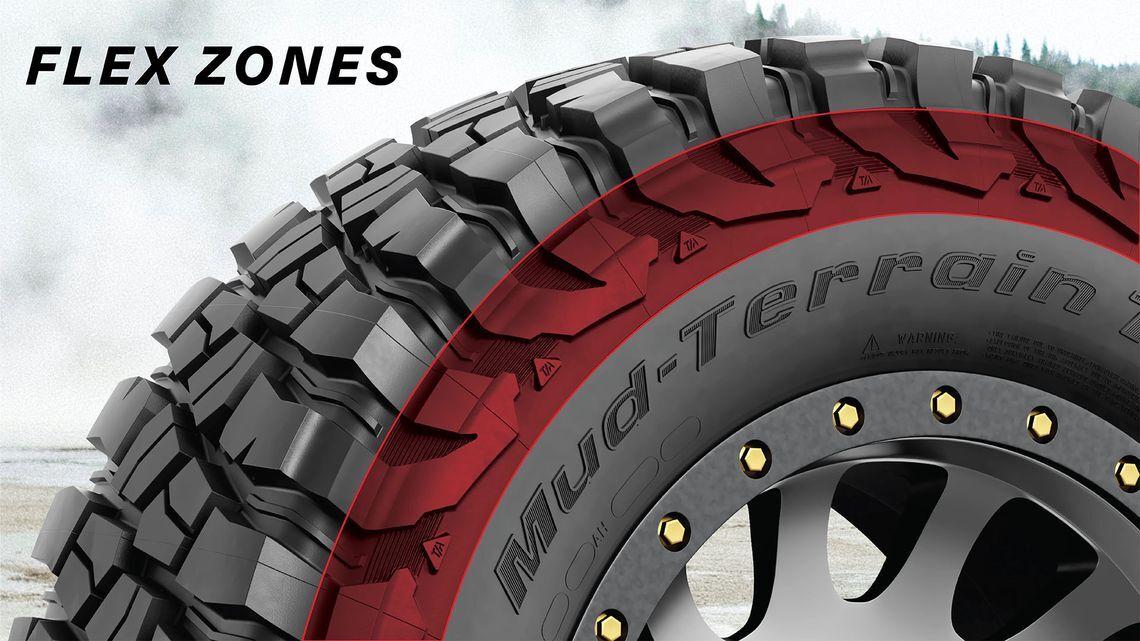
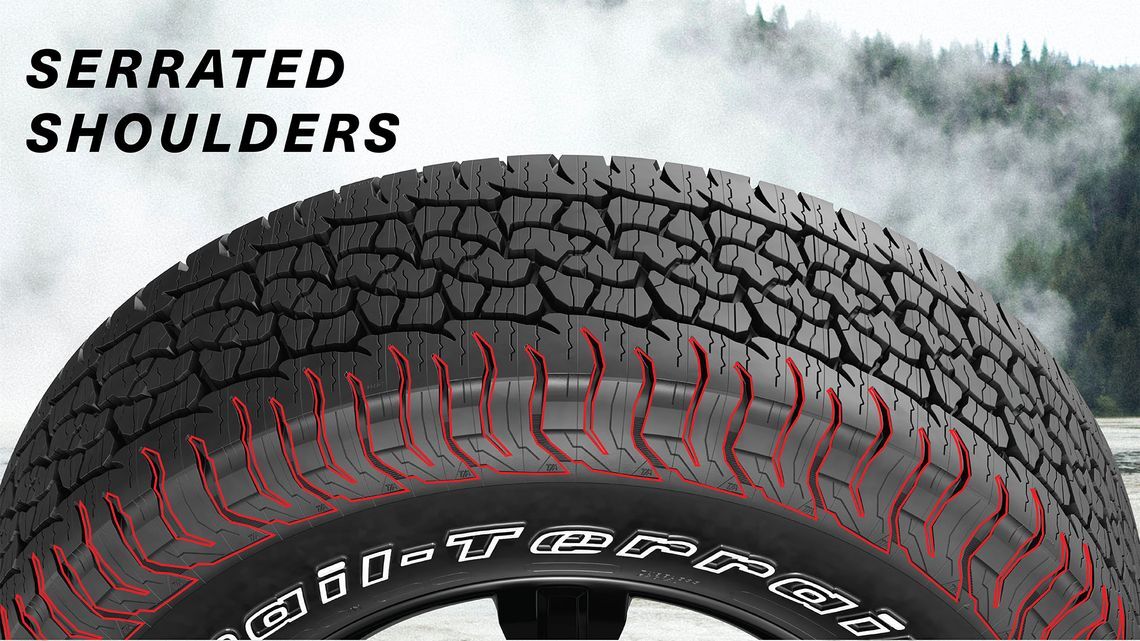
Like compounds in a rubber formula, each feature of a tire works with the others to create dependable traction in any condition:
Tread Blocks and Tread Pattern
Form the foundation of traction. The layout of the tread determines how the tire grips the surface. Every BFGoodrich terrain tire uses a related pattern designed to provide strong leverage across multiple environments, from wet highways to rocky climbs.
Sipes
Improve traction in wet, snowy, or slushy conditions. Sipes are useful, but they come with trade-offs, heavily siped tires can wear faster. Innovations like the 3D-locking sipes on the BFGoodrich Trail-Terrain T/A help reduce wear while maintaining grip.
Mud-Phobic Bars
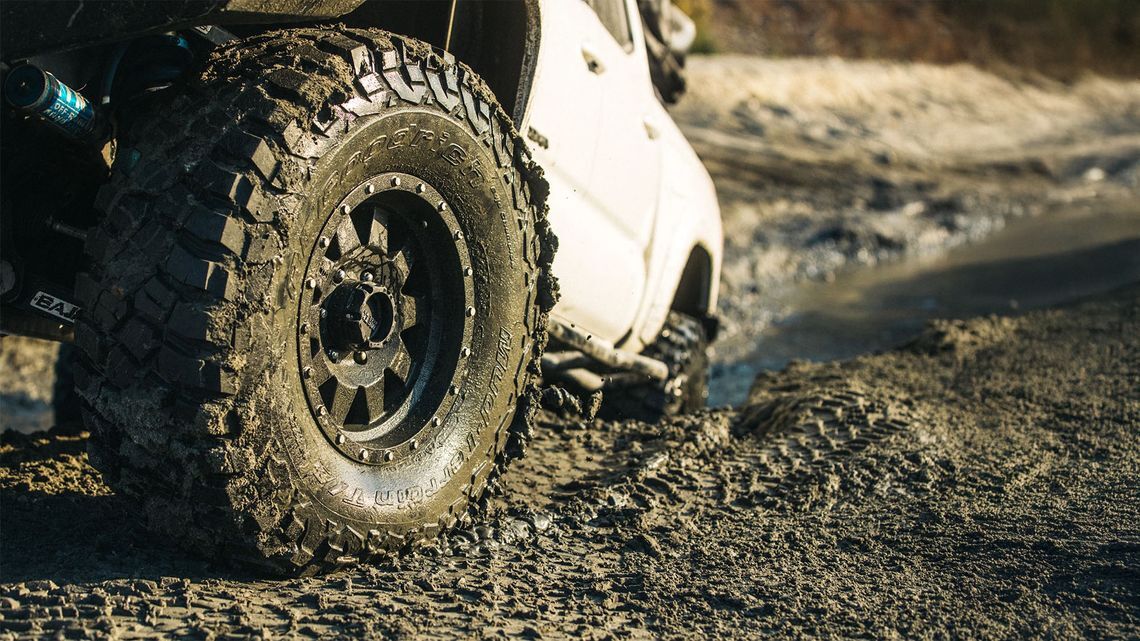
Release packed mud or soft soil as the tire spins. Found on the BFGoodrich Mud-Terrain T/A KM3, these bars prevent buildup that can reduce traction in sticky off-road conditions.
Flex Zones
Allow the tire to flex when aired down for rocky terrain, then stay stable when aired up for pavement. The KM3’s unique tread design creates “Linear Flex Zones” that adapt to the terrain without sacrificing durability.
Serrated Shoulders
Add “teeth” to the outer edge of the tire, increasing surface contact and grip, a signature feature of the BFGoodrich All-Terrain T/A KO2, known for its off-road bite and winter traction.
Proprietary Mold Technology
Enables tread to extend further around the sidewall, creating additional functional surface area.
“If you compare our tires with others, you’ll notice our tread wraps farther down the shoulder,” Sturgis explains. “That extra real estate gives drivers more traction where they need it most.”
How the Sausage Is Made
Grip isn’t invented in a meeting room, it’s earned through experience. It’s a mix of chemistry, engineering, and a lot of dirt under the fingernails.
It might be perfected in the lab, but it’s proven on the road. From greasy factory floors to frozen northern highways and the muddy trails of the backcountry, the real world remains the best test track.
“You can’t just sit behind a desk and come up with the next great tire,” says Sturgis. “You have to get out there, push the limits, and see how it performs. At BFGoodrich, the people designing the tires are the same ones testing them in the field, at motorsport events, on trails, and across every kind of terrain.”
Because real grip isn’t theory. It’s built, tested, and lived, one road, one trail, one challenge at a time.
Frequently asked questions
BFGoodrich answers your most asked questions.
FAQ
Grip is the friction between the tread and the road surface that allows you to accelerate, brake, and turn. It comes from two main mechanisms: adhesion, where the rubber bonds momentarily to the surface at a molecular level, and hysteresis, where the rubber deforms around the surface texture and grips mechanically.
Sipes are the small slits cut into tread blocks. Each one creates additional biting edges that grip snow and ice, and they help channel water and slush away from the contact patch. On a winter tire the sipe density is a defining feature, which is why winter tread looks visibly busier than a summer tire.
Because rubber compound stiffens as temperature drops. A summer or all-season compound below about 7°C becomes measurably harder, which reduces its ability to conform to the road surface and generate grip. Winter compounds are formulated to stay flexible through that range, which is the entire reason they exist.
On wet, snowy, or slushy surfaces, significantly. Tread depth is what allows the tire to evacuate water and slush from the contact patch. As depth decreases, that capacity drops and the risk of hydroplaning rises. On dry pavement, depth matters far less.
Not straightforwardly. A wider contact patch can increase grip, but so can pressure concentration, compound choice, and how well the tire conforms to the surface. This is why a narrow winter tire can out-grip a wide summer tire on ice despite having far less rubber touching the road.