WHEN TO BALANCE
A tire is replaced
A balance weight is moved or removed
You purchase new tires
HOW WHEELS ARE BALANCED
Frequently asked questions
BFGoodrich answers your most asked questions.
FAQ
Balancing corrects uneven weight distribution in the tire and wheel assembly. Even a small heavy spot creates a repeated force at every rotation, which at highway speed becomes a vibration you can feel. Left uncorrected it produces cupped tread wear, noise, and accelerated wear on bearings, shocks, and steering components.
Vibration is the main symptom and it typically appears in a specific speed range then fades above and below it. Felt through the steering wheel, the imbalance is likely at the front. Felt through the seat or floor, more likely at the rear. Uneven cupped or scalloped tread wear is another sign of long-running imbalance.
Every time a tire is mounted on a wheel. Also whenever a new vibration appears, after a wheel weight falls off, and typically as part of a rotation service. Canadian winters are hard on wheel weights, since salt and ice impacts can knock adhesive weights loose, so a rebalance at the spring changeover is worth asking for.
Static imbalance makes the assembly hop up and down, called tramp. Dynamic imbalance makes it shake side to side, called shimmy. Modern balancing machines correct both by spinning the assembly and calculating where weights go on the inner and outer rim edges. Both matter, particularly at highway speed.
Yes, all four assemblies do. Rear imbalance shows up through the seat and floor rather than the steering wheel, so drivers often notice it later or blame something else. At highway speed an unbalanced rear assembly stresses bearings and suspension exactly as a front one does.
No, they are different services solving different problems. Balancing corrects weight distribution within the tire and wheel assembly and fixes vibration. Alignment adjusts suspension angles so the tires meet the road correctly and fixes pulling and uneven wear. Shops often recommend them together because both affect tire life, but they are not interchangeable.
Related pages
-

TIRE ROTATION
Rotating your tires is not a gimmick. Tires wear at different rates depending on position, and moving them on schedule spreads that wear across all four instead of destroying two. Rotate every 10,000 to 12,000 km, or as your owner's manual specifies. The correct pattern depends on your drivetrain and whether your tires are directional, so confirm both before you start.View more -

HOW TO CHECK TIRE PRESSURE
Tires can lose up to 1 psi every month even with no puncture, and cold Canadian weather drops it further. Check all four plus the spare once a month or before any long trip. Buy a trusted gauge, check cold before driving or at least three hours after, press the gauge onto the valve stem, and compare against the sticker inside your driver's door. Never use the sidewall number as your target.View more -
TIRE ALIGNMENT
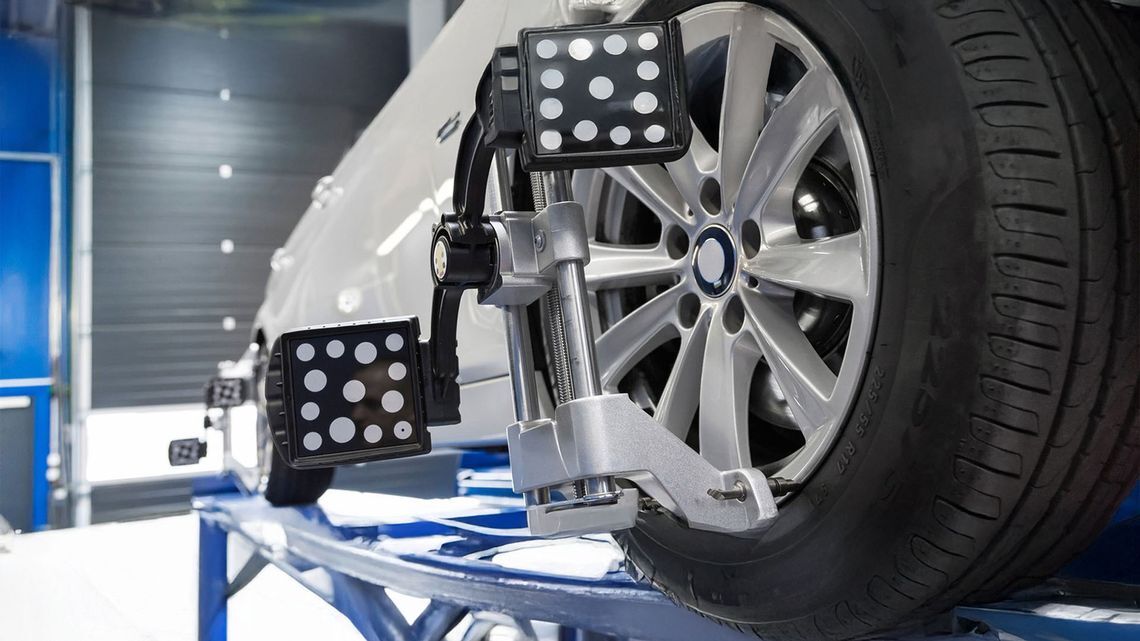
Alignment is the adjustment of your vehicle's front and rear suspension components, and it has to be correct. If the alignment is off, the vehicle is not safe to drive. Three angles are adjusted: caster, camber, and toe. Misalignment scrubs tread away, pulls the vehicle to one side, and makes steering imprecise. On Canadian roads, potholes after every freeze and thaw cycle are the leading cause.View more -

TIRE CARE
Nothing makes a vehicle look better than a clean set of tires and wheels, but the wrong cleaner costs you more than it saves. Many wheel cleaners contain harsh acids, alkalis, and detergents that damage wheels and paint. Use acid-free products only. In Canada there is a second reason to keep tires clean: road salt and brine accelerate rubber degradation and corrode wheels and valve stems.View more -

TIRE INSPECTOR TOOL
The quarter test is the fastest tread check in Canada and it costs nothing. Insert a Canadian quarter into a main groove with the caribou's nose pointing down. If the tread covers the nose, you have useful depth left. If the nose is fully visible, your tread is low and replacement should be planned now. Check several grooves across each tire, because wear is rarely even.View more