WINTER DRIVING TIPS
Driving safely in winter conditions requires knowledge, skill and four winter tires with proper tread.
Drive with two hands. Always.
Before turning, slow down while travelling in a straight line.
While turning, maintain a slow and regular speed. If you accelerate suddenly, your tires could lose traction.
While turning, don’t make any sudden steering wheel movements.
Only brake in a straight line before the turn, and do so gradually. Do not brake during the turn.
Increase your following distance from other cars significantly.
If your wheels lock and slide, release the brake pedal to recover traction, then slowly brake again.
Try to avoid changing lanes in slush. It’s safer to change lanes when slush is not on the road.
If using chains, check for proper clearance between the tire and the vehicle, as well as the clearance between dual tires.
Frequently asked questions
BFGoodrich answers your most asked questions.
FAQ
Slow down before you need to. Brake in a straight line before entering a corner, never during it. Increase your following distance substantially, well beyond the dry-road gap. Make every steering, throttle, and brake input smooth and gradual. Keep both hands on the wheel. These work with whatever grip your tires have available.
Yes. All-wheel drive and four-wheel drive help you accelerate on slippery surfaces. They do nothing for stopping or turning, both of which depend entirely on tire grip. A front-wheel drive car on four winter tires will out-brake an all-wheel drive vehicle on all-seasons on ice, every time.
When daily temperatures consistently approach 7°C. In practice that means early to mid-November for most of the country. In Quebec they are legally required from December 1 to March 15, and shops fill up fast in November, so booking three weeks ahead is sensible. In BC, designated highways require them from October 1.
Ease off the accelerator without braking hard, look where you want the vehicle to go, and steer there smoothly. If the rear is sliding out, steer gently in the direction it is sliding. If the front is pushing wide, ease off and wait for the front tires to regain grip before adding more steering. Sharp corrections make both worse.
A thin transparent layer of ice that looks like wet pavement, most common on bridges, overpasses, shaded sections, and early mornings after a thaw and refreeze. You often cannot see it. Reduce speed in those specific locations before you reach them, keep inputs smooth, and if you feel the vehicle go light, do not brake or steer sharply.
No. It creates a traction imbalance between axles that produces unpredictable handling in emergency braking and cornering. In Quebec it is also illegal, since all four tires must carry the 3PMSF symbol during the mandate period. Four matching winter tires is the only safe configuration.
Related pages
-

ROAD TRIPS
Luggage is packed. Gas tank’s full. GPS is set. Sunglasses and seatbelt are on. You’re ready to roll, right? Wrong. You still need to check your tires. After all, they’re the only thing between you and the open road. Just follow this simple checklist and you’ll know your tires are fully prepped for your road trip:View more -
WET DRIVING
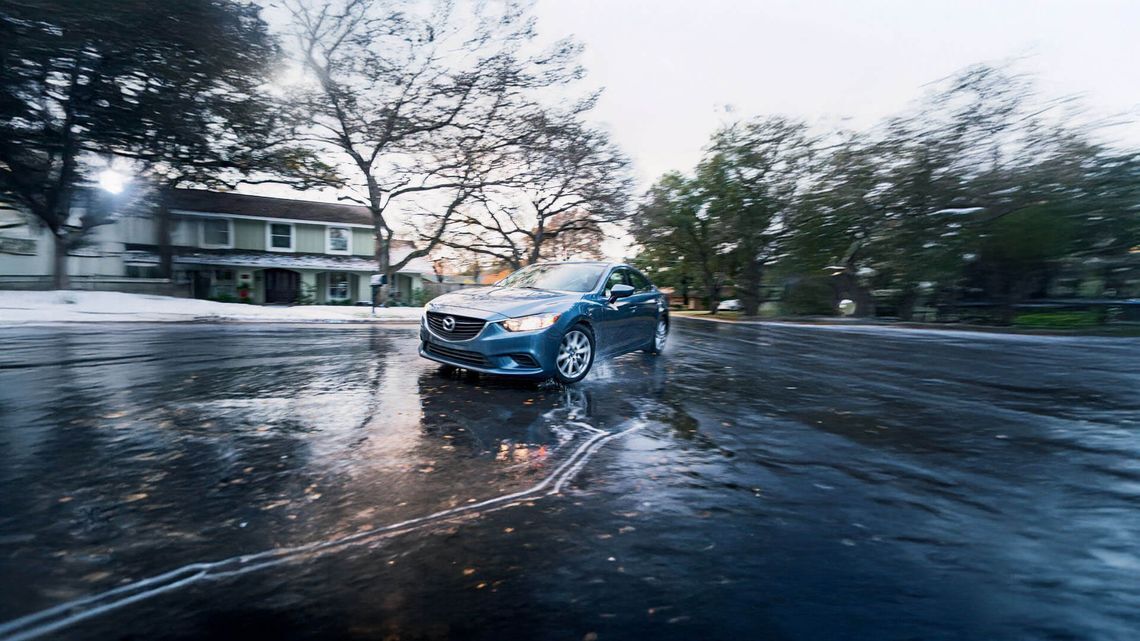
There’s a trick to driving in wet conditions. You ready? Here it is. SLOW DOWN. Seriously, if more drivers would heed this advice in the rain, accidents would dramatically decrease. Wet weather doesn’t get the same attention as snow and ice, but it should. Wet roads present similar dangers—like less grip and longer stopping distance.View more -

GAS MILEAGE AND TIRES
Some tires grip better. Some last longer. Some are engineered specifically for better fuel economy through lower rolling resistance. Rolling resistance is the energy your tire consumes deforming against the road with every rotation, and it is one of the few fuel variables you directly control. The other is inflation pressure, which costs nothing to get right and which cold weather quietly erodes.View more -
OFF ROAD DRIVING
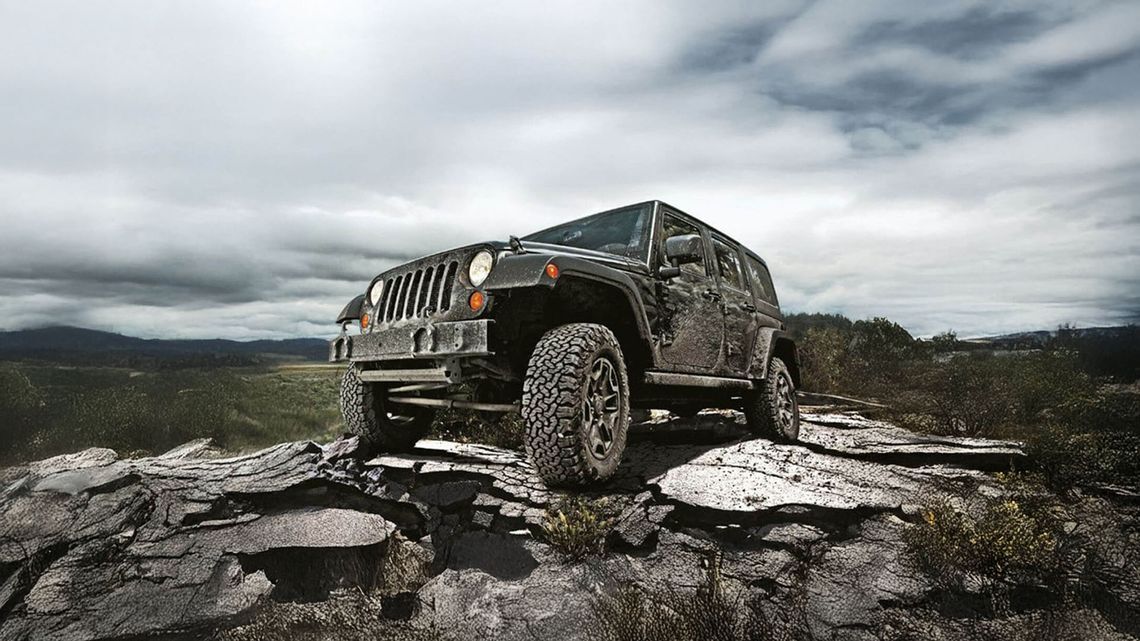
If you’re going to learn, learn from the experts. BFGoodrich Tires has 24 SCORE Baja 1000 wins and 70 overall four-wheel SCORE Desert Race titles. So yeah, we own the off-road. Off-road driving can be fun, especially when it’s intentional. But, it’s a different kind of driving. We recommend you understand the basic techniques, so you don’t get stuck in a precarious situation.View more