How to inspect a tire
Hold the quarter between your thumb and forefinger with the quarter head facing down.
Select a point on your tire where tread appears the lowest and insert the figurehead first into one of the grooves.
If the top of the figurehead is covered by tread, you're driving with the legal and safe amount of tread. If your tread gets below that, your car's ability to grip the road in adverse conditions is greatly reduced.
(Need new tires? Use our practical BFGoodrich Tire Selector Tool)
To make sure your car's tread is road-ready, do the Quarter Test below.
Frequently asked questions
BFGoodrich answers your most asked questions.
FAQ
Insert a quarter into a main tread groove with the caribou's nose pointing down into the tire. If the tread covers the caribou's nose, you are above roughly 6/32 of an inch and in reasonable shape. If the nose is fully visible, your tread has worn down and it is time to plan replacement, particularly before winter. Check the inner, middle, and outer grooves on each tire.
A tread depth gauge gives you a precise number and costs very little. Insert the pin into the shallowest groove until the base sits flush against the tread, then read the measurement. Take readings at three points across the tire, inner, middle, and outer, because uneven readings tell you something is wrong with pressure or alignment.
1.6 mm, or 2/32 of an inch, is the legal minimum in most provinces and the point where wear bars sit flush with the tread. But that is the legal floor, not a safe target. Transport Canada and most provinces recommend at least 3.2 mm for winter tires, and CAA recommends starting a winter season around 4.8 mm.
Raised rubber ridges moulded into the bottom of the main tread grooves at 1.6 mm. When the tread surface wears down level with these bars, the tire has reached its legal wear limit and must be replaced. They are the simplest visual check available and require no tools at all.
Cuts or gashes deep enough to expose the cord layer underneath. Cracking in the rubber, particularly cracks that open when you flex the sidewall. Any bulge or bubble, which means internal cords have broken and the tire can fail without warning. A bulge means replace immediately and do not drive on it.
No. Pulling it can turn a slow leak into rapid air loss and leave you stranded. If the tire is holding pressure, drive carefully to a tire professional and let them remove it and assess whether it is repairable. A tread puncture away from the shoulder is usually repairable. A sidewall puncture never is.
Related pages
-

TIRE ROTATION
Rotating your tires is not a gimmick. Tires wear at different rates depending on position, and moving them on schedule spreads that wear across all four instead of destroying two. Rotate every 10,000 to 12,000 km, or as your owner's manual specifies. The correct pattern depends on your drivetrain and whether your tires are directional, so confirm both before you start.View more -

TIRE BALANCE
Tire balancing is pretty much what it sounds like. It compensates for the weight of the tire and wheel assembly after the tire is mounted. A wheel is out of balance when one area is heavier or lighter than the rest. That causes bouncing or wobbling, which can decrease treadwear, increase vibration and cause stress on your vehicle. The cure? Correction weights are added to counterbalance the tires.View more -

HOW TO CHECK TIRE PRESSURE
Tires can lose up to 1 psi every month even with no puncture, and cold Canadian weather drops it further. Check all four plus the spare once a month or before any long trip. Buy a trusted gauge, check cold before driving or at least three hours after, press the gauge onto the valve stem, and compare against the sticker inside your driver's door. Never use the sidewall number as your target.View more -
TIRE ALIGNMENT
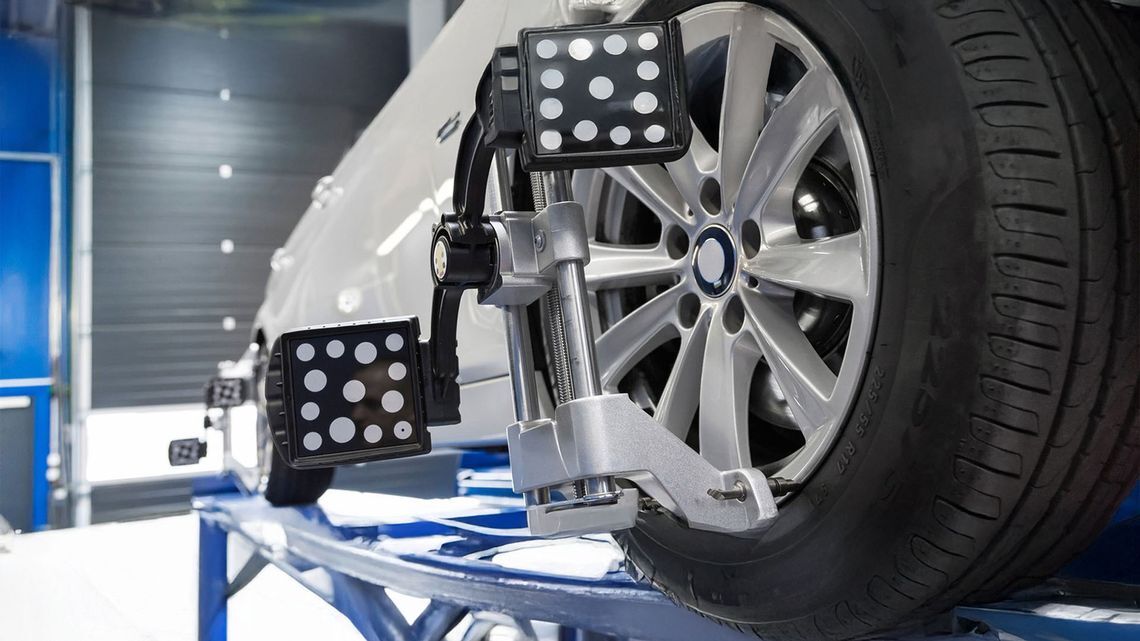
Alignment is the adjustment of your vehicle's front and rear suspension components, and it has to be correct. If the alignment is off, the vehicle is not safe to drive. Three angles are adjusted: caster, camber, and toe. Misalignment scrubs tread away, pulls the vehicle to one side, and makes steering imprecise. On Canadian roads, potholes after every freeze and thaw cycle are the leading cause.View more -

TIRE CARE
Nothing makes a vehicle look better than a clean set of tires and wheels, but the wrong cleaner costs you more than it saves. Many wheel cleaners contain harsh acids, alkalis, and detergents that damage wheels and paint. Use acid-free products only. In Canada there is a second reason to keep tires clean: road salt and brine accelerate rubber degradation and corrode wheels and valve stems.View more