Regular rotation is important for vehicles with dual rear wheels as well. Below are the two most common rotation patterns for 6-wheeled vehicles. However, check your owner's manual to see if there is a recommended rotation scheme.
Frequently asked questions
BFGoodrich answers your most asked questions.
FAQ
It depends on your drivetrain. Front-wheel drive typically uses a forward cross: fronts move straight back, rears cross to the opposite front corner. Rear-wheel drive uses a rearward cross: rears move straight forward, fronts cross to the opposite rear. All-wheel and four-wheel drive typically use an X pattern, crossing all four. Directional tires can only move front to back on the same side.
Use the forward cross pattern. The two front tires move straight back to the same side. The two rear tires cross over to the opposite front corner. Front tires on a front-wheel drive vehicle handle steering, braking, and driving torque simultaneously, so they wear fastest and this pattern moves them into the easier rear positions.
Typically an X pattern, where each tire crosses diagonally to the opposite corner. All four wheels receive power on these vehicles so wear is more even than on two-wheel drive, but rotation still matters. Four-wheel drive systems are sensitive to differences in rolling circumference between tires, which makes keeping wear even more important, not less.
Directional tires have an arrow moulded into the sidewall showing which way they must turn. Those tires can only move front to back on the same side of the vehicle, never crossed side to side, unless you dismount and remount them on the wheels. Always confirm the arrows point forward after any rotation.
Every 10,000 to 12,000 km, or as your owner's manual specifies. Rotate sooner at the first sign of irregular wear, even before that kilometre count. Many Canadian drivers pair rotation with the seasonal tire changeover, which is convenient but may be too infrequent if you cover high annual mileage.
Rotation redistributes wear but does not fix its cause. Wear on both shoulders points to underinflation. Centre wear points to overinflation. Wear on one edge points to alignment. A cupped or scalloped pattern points to imbalance or worn shocks. Fix the cause first, or the same pattern repeats in the next position.
Related pages
-

TIRE BALANCE
Tire balancing is pretty much what it sounds like. It compensates for the weight of the tire and wheel assembly after the tire is mounted. A wheel is out of balance when one area is heavier or lighter than the rest. That causes bouncing or wobbling, which can decrease treadwear, increase vibration and cause stress on your vehicle. The cure? Correction weights are added to counterbalance the tires.View more -

HOW TO CHECK TIRE PRESSURE
Tires can lose up to 1 psi every month even with no puncture, and cold Canadian weather drops it further. Check all four plus the spare once a month or before any long trip. Buy a trusted gauge, check cold before driving or at least three hours after, press the gauge onto the valve stem, and compare against the sticker inside your driver's door. Never use the sidewall number as your target.View more -
TIRE ALIGNMENT
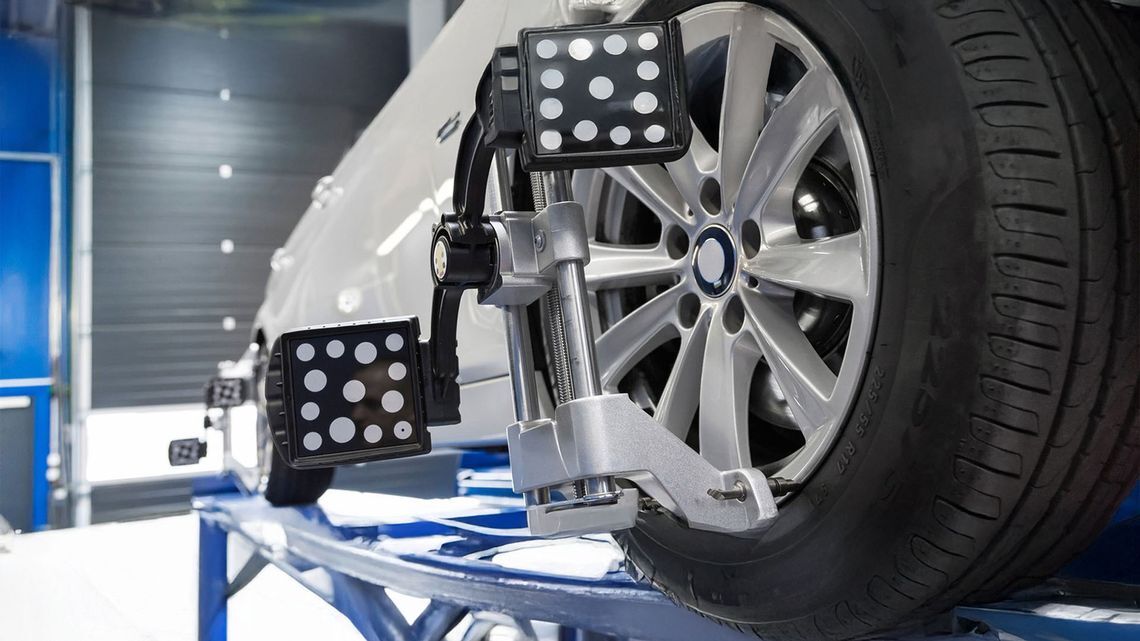
Alignment is the adjustment of your vehicle's front and rear suspension components, and it has to be correct. If the alignment is off, the vehicle is not safe to drive. Three angles are adjusted: caster, camber, and toe. Misalignment scrubs tread away, pulls the vehicle to one side, and makes steering imprecise. On Canadian roads, potholes after every freeze and thaw cycle are the leading cause.View more -

TIRE CARE
Nothing makes a vehicle look better than a clean set of tires and wheels, but the wrong cleaner costs you more than it saves. Many wheel cleaners contain harsh acids, alkalis, and detergents that damage wheels and paint. Use acid-free products only. In Canada there is a second reason to keep tires clean: road salt and brine accelerate rubber degradation and corrode wheels and valve stems.View more -

TIRE INSPECTOR TOOL
The quarter test is the fastest tread check in Canada and it costs nothing. Insert a Canadian quarter into a main groove with the caribou's nose pointing down. If the tread covers the nose, you have useful depth left. If the nose is fully visible, your tread is low and replacement should be planned now. Check several grooves across each tire, because wear is rarely even.View more